January 21, 2025
How have artists changed in their approaches to earth, land related works over the years?
As ideas of ecology, energy, and interconnected ecological thinking have evolved, artists have increasingly re-imagined the relationship between humans, land and the natural world.
Artists have radically transformed their approach to environmental art over the years. Awareness has grown as we begin to understand the meaning of quantum entanglement. The land art movement kicked off in the 1960s and 70s. When artists began exploring new ways to view life, outside the internal confines of the white-cube gallery space. Initially, land art was large, masculine, dramatic, and exciting.
You could say, the initial proponents might have had a bit of a god complex.
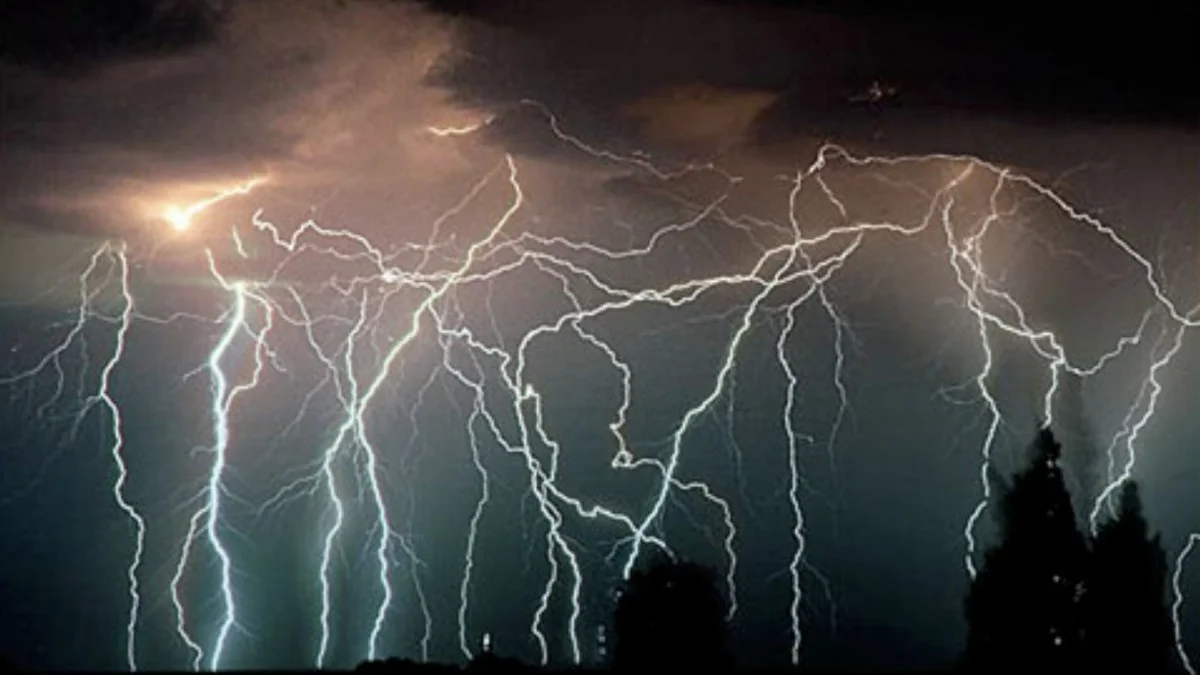
One of the first artists to explore land art was Walter de Maria. He created a structure that could conduct lightning with 400 steel poles, called The Lightening Field (Kosky, 2012). To this day, small groups of visitors (1-6 people) can book an overnight log cabin stay to experience a force that cannot be contained.
At first, male artists dominated environmental art.
Earthworks were invasive and lacked appreciation for the land herself. Notably, they are meant to be experienced in person. In 1969, Michael Heizer dug massive trenches through a cliff with a digger in his temporal work Double Negative, Nevada (Larson, 1994). Heizer’s work was initially ephemeral, until the creation of the urban complex The City, 1970-2022, Nevada.
In the 70's, artist Nancy Holt and her husband Robert Smithson worked on a wide range of land art pieces, including Sun Tunnels, 1973-76, Utah and Spiral Jetty, 1970, Utah. Holt was a pioneering female environmental artist with her large-scale installations that emphasised the collaboration of a team of experts, such as astrologers and local construction workers.
Over time, our relationship with the earth and the creation of art has shifted immensely. The language of sustainability emerged prominently in the 90s, forging the path to a thoughtful “More than human” approach to art. Where interconnectedness and interbeing are now the primary focus.
References
Kosky, J.L. (2012) Arts of wonder: enchanting secularity: Walter de Maria, Diller + Scofidio, James Turrell, Andy Goldsworthy. Chicago: The University of Chicago Press.
Larson, K. (1994) ‘Double Negative (Overton, Nevada, earthwork)’, New York, 27(4), p. 51.