May 29, 2026
Guarding Attention
Reflecting on attention as a form of life force. Exploring the difference between nourishing connection and parasitic distraction. Drawing on art (pun intended) horses, Buddhism, and social dynamics. This essay considers how sensitivity, boundaries, and discernment protect clarity, presence, and the conditions needed for genuine creative work.
What I have begun to see more clearly is that not all connection is mutual. Some forms of attention are nourishing. Others are parasitic.
Mutual connection feels steadying. It has goodwill in it. Both people want the other to do well. It is not merely an exchange of energy, or an appetite to be filled. It has clarity, and it leaves both parties more fully themselves. Parasitic attention is different. It may feel exciting for a moment, flattering even, but afterwards it drains. It leaves a residue. It pulls focus, weakens form, and creates confusion. It is a little like intoxication: a brief charge followed by depletion.
This difference has become increasingly apparent to me in relation to art. I have found that I can no longer work easily in certain shared studio environments. For the past six months I have done most of my work at home, going into university only when necessary. The atmosphere in the art school often felt wrong to me, not because it was lively, but because it seemed full of people feeding on one another’s attention. There was a great deal of social energy, but not always much real work. It often felt as if people were not wholly directed toward making their own best life, but were instead glancing sideways, taking cues from others, wanting what another person had, or trying to enter a field that was not theirs.
This has led me to think about the difference between loving art and loving the permission structure around art. These are not the same thing. There are people who are nourished by the atmosphere around art: the community, the looseness, the identity, the sense of exception, the social and emotional charge of being near artistic activity. Then there are those who are nourished by the work itself: by concentration, by learning, by connecting concepts, by entering flow, by the slow formation of something inwardly true. I do not say this as a criticism. I only mean that these are different orientations, and they create very different energies in a space.
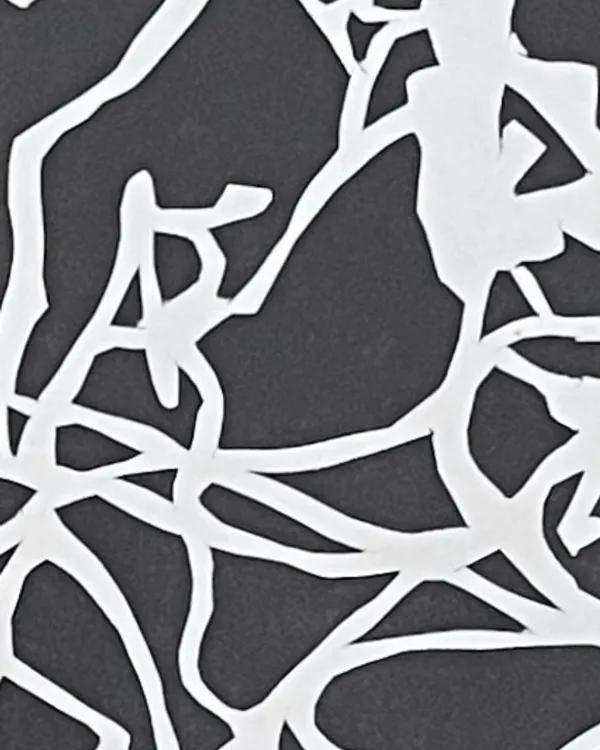
Recently I have been thinking about Donna Haraway’s idea of the tentacular. Tentacles reach, sense, test, feel outward, make contact. It is a compelling image for relation. But I do not think it necessarily implies indiscriminate openness. A tentacle does not only connect; it also discerns. It explores selectively. It withdraws. It does not surrender itself to everything it touches. This feels important, because relation without discernment can quickly become confusion.
I have been thinking about attention as a life force.
For a long time I thought openness was a virtue. I thought being receptive, available, and connected was naturally a good thing. In art school, and later in other areas of life, I noticed that people would often connect onto me very quickly. They wanted to talk, to share, to enter the space I was holding. For years I read this as friendliness, or simply as part of being a sensitive person in a social environment. I am no longer sure that this is true.
Alongside this, I have also found myself thinking of the Buddhist image of the hungry ghost. This image helps name another form of relation, one that is not really relation at all. The hungry ghost does not meet; it feeds. It does not witness; it consumes. In certain charged social and artistic spaces, this is exactly what can happen. A person, a performance, or a work begins to generate energy through concentration and form, and others are drawn not to support that process, but to interrupt it, absorb it, or pull it toward themselves. What appears on the surface as drama, flirtation, rivalry, or noise may underneath be a more basic appetite: the desire to feed off the life force someone else has gathered.
I saw this very clearly in a recent live performance. My daughter was doing a kinetic drawing piece in a public setting. She wore headphones, which now strikes me as an intuitive and intelligent protection of the field. Around her were multiple audiences: some there intentionally, others merely passing by, some curious, some cynical, some not understanding that they were in the presence of an artwork at all. Just before the performance, two men began fighting nearby, and the emotional atmosphere became disruptive enough that she almost did not perform. The conflict appeared to be about something personal and petty, but what I felt more deeply was that they were taking the creative charge she had built and turning it toward themselves. The headphones were not a withdrawal from the audience. They were a membrane. They protected the coherence of the work from a surrounding field that could easily have fractured it.
This has made me realise that protecting attention is not the same as refusing connection. It is the condition under which real connection remains possible. Headphones, silence, distance, not initiating, leaving early, not making eye contact, choosing not to open a conversation: these are often read socially as coldness or rudeness, especially in women. But I no longer believe that constant availability is a virtue. There is a gendered expectation that sensitive women, in particular, should remain readable, relational, and accessible. Yet for an artist, and perhaps for anyone trying to live truthfully, this can become a profound liability. One cannot make work while being endlessly entered.
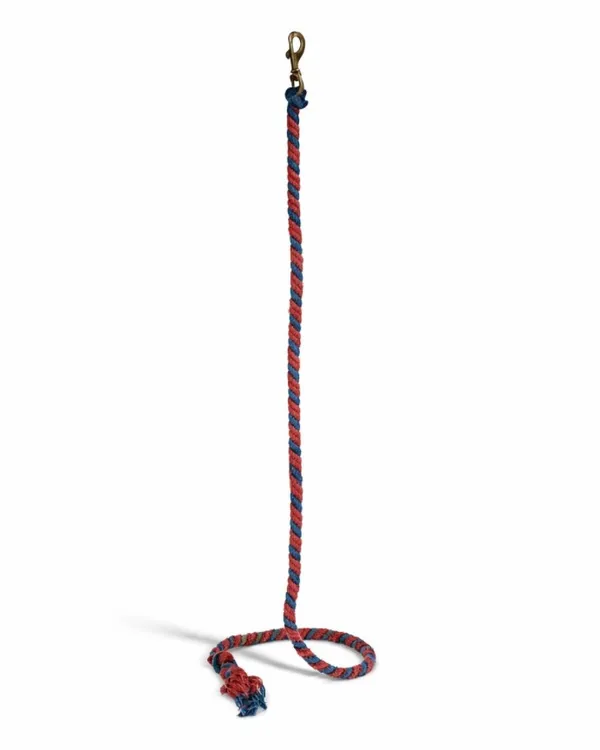
I have learned something similar through horses. I used to think that to connect with them I needed to remain very open. But too much openness can create muddy signals. It can become unclear what is being asked, who is leading, where the form is. Softness is not the same as permeability. A horse does not need a person who is open in every direction. It needs a person who is calm, present, and clear. I now think this is true of art as well. The field must be sensitive, but also held.
Perhaps this is what I am guarding: life energy, emotional energy, time, sensitivity, artistic clarity. Good attention feels soft but protected. It allows focus, coherence, and flow. When the signal becomes muddy, I feel confusion, split focus, a kind of fuzziness in the head. Guarding attention, then, is not only psychological. It is formal. It is ethical. It is how one keeps the conditions of perception intact.
There is also an ethical difference between witnessing and taking. To witness is to allow something to be what it is. It is to stay quiet when quiet is needed, to refrain from unnecessary interruption, to hold back one’s own appetite. To take energy from something is different. It is to insert oneself into another person’s process, to claim a share of its charge, to pull it away from its own centre of gravity. Increasingly, I feel that much of social life is organised around this taking, and that many people do not know the difference.
What I am arriving at is simple, though not easy: not all connection is meaningful, and not all openness is kind. Some forms of openness merely allow the hungry to feed. A conscious guarding of attention is therefore not a rejection of relation, but a way of preserving its possibility. It allows the work to remain whole. It allows the self to remain intact. It allows genuine meeting to take place on clearer terms.
To protect attention is not to withdraw from life. It is to choose the terms on which life may enter.